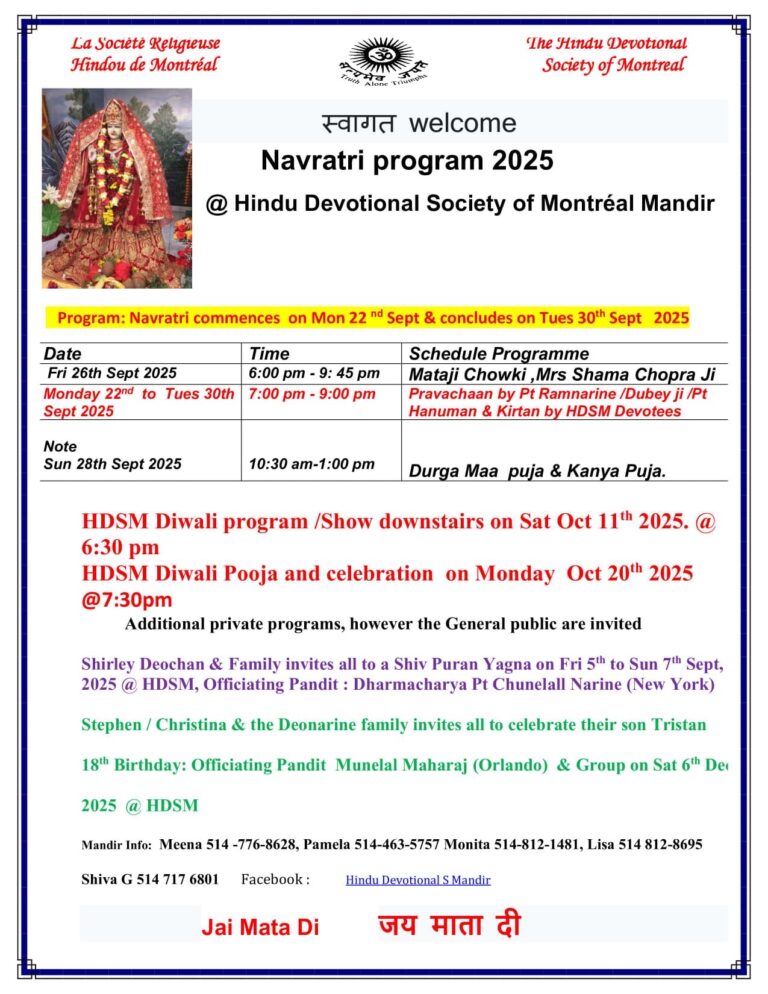
The Meaning of Navratri Navratri, which literally means “nine nights,” is one of the most sacred and celebrated festivals in the Hindu calendar. It is dedicated to honoring the Divine Feminine, also known as Shakti or Devi, in her various forms. Over nine days and nights, devotees worship different manifestations of Goddess Durga, seeking her blessings for strength, protection, prosperity, and spiritual growth. The festival symbolizes the triumph of good over evil, light over darkness, and positive energy over negativity.
During Navratri, each day is associated with a different form of the Goddess, from Shailaputri to Siddhidatri, representing a journey from the physical to the spiritual. Devotees fast, pray, sing devotional songs, and perform traditional dances such as Garba and Dandiya to express joy and devotion. This period is not only a time of prayer but also self-reflection and purification — a chance to renew one’s mind, body, and spirit.
Navratri also carries a strong sense of community and cultural heritage. Families gather, temples are beautifu lly decorated, and vibrant rituals create an atmosphere of unity and devotion. For many, Navratri is a time to reconnect with their roots, deepen their faith, and celebrate the power of the Divine Mother in everyday life.